
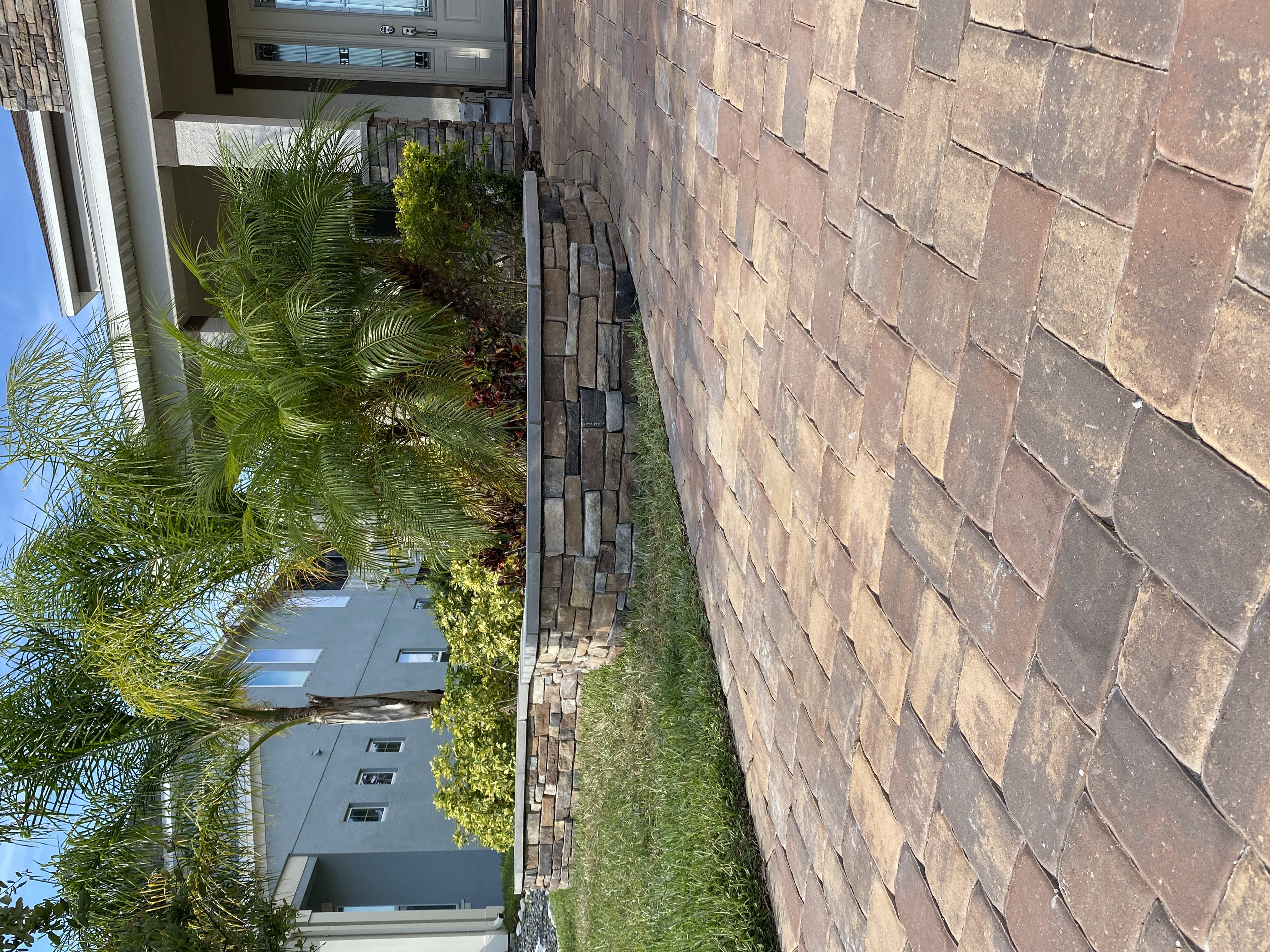
Walk any Tampa Bay neighborhood and you will see two kinds of paver driveways: the ones that still look new after five years, and the ones that look tired after two. Sealer is a big part of the difference, but it is not magic, and it is not always the right call. Here is the honest breakdown.
What sealer actually does
Paver sealer does three things. It deepens color, so the pavers look richer. It stabilizes joint sand, so weeds and ants have a harder time moving in. And it makes the surface easier to clean, because oil and organic stains sit on top of the sealer instead of soaking into the paver.
What it does not do: it does not fix a bad installation. If pavers are settling, rocking, or spreading because the base was wrong, sealer just locks in the problem with a glossy finish.
The Florida factor
Florida is harder on pavers than most places. Our UV index bleaches color fast. Afternoon downpours drive water into every joint. And our sandy soil means joint sand washes out quicker here than up north.
That is exactly why sealing makes more sense in Florida than almost anywhere. The UV protection alone is worth it: unsealed pavers in direct Tampa sun can look faded in three years. Sealed pavers hold their color far longer.
When sealing is worth it
New paver installation. This is the best time. The pavers are clean, the joint sand is fresh, and one sealing locks everything in from day one. We recommend waiting 60 to 90 days after installation so efflorescence (that white haze) has a chance to surface and wash off first.
Driveways and pool decks. High traffic, oil drips, sunscreen, and food spills. Sealer earns its keep here.
When weeds and ants are winning. If you are fighting a constant battle with weeds in the joints, sealer over fresh polymeric sand is the real fix, not another round of weed killer.
When to skip it or wait
The pavers are failing structurally. Sealing over settling, heaving, or spreading pavers is putting lipstick on a structural problem. Fix the base first.
There is trapped moisture. Sealer over damp pavers turns milky white, and it is miserable to fix. In Florida, that means sealing in the dry season and making sure the pavers have had several dry days.
You hate maintenance. Sealer wears off. In Florida sun, expect to reseal every 2 to 3 years on driveways. If you will not maintain it, an unsealed driveway that ages naturally looks better than a sealer job halfway worn off.
The mistakes that ruin paver jobs
Sealing too soon. Fresh pavers need to cure and off-gas. Seal in the first month and you can trap efflorescence under the film, leaving permanent white clouding.
One thick coat instead of two thin ones. Thick sealer puddles, gets slippery, and peels. Two thin coats is the pro method, every time.
Sealing dirty pavers. Every stain, tire mark, and rust spot gets locked in permanently. Proper prep is pressure washing, treating stains, re-sanding joints, and then sealing.
Using the wrong sealer. Film-forming sealers give the wet look and the most stain protection. Penetrating sealers keep the natural look with less maintenance. For most Florida driveways, a quality water-based film-forming sealer is the sweet spot.
What does it cost?
Professional paver sealing in the Tampa Bay area typically runs $1.00 to $2.00 per square foot, depending on condition, prep needed, and whether re-sanding is included. A standard two-car driveway usually lands between $400 and $900.
The bottom line
In Florida, sealing is worth it for most driveways and pool decks, as long as the installation underneath is sound and you are willing to reseal every few years. It is the cheapest way to keep pavers looking new.
If your pavers are settling, spreading, or past saving with sealer, that is a conversation about repair or reinstallation. We do free on-site evaluations across Tampa Bay and Citrus County. Call (813) 445-1233 and we will tell you straight whether sealer or something bigger is the answer.
